
Rain in Rarotonga: How to Plan a Flexible Island Holiday
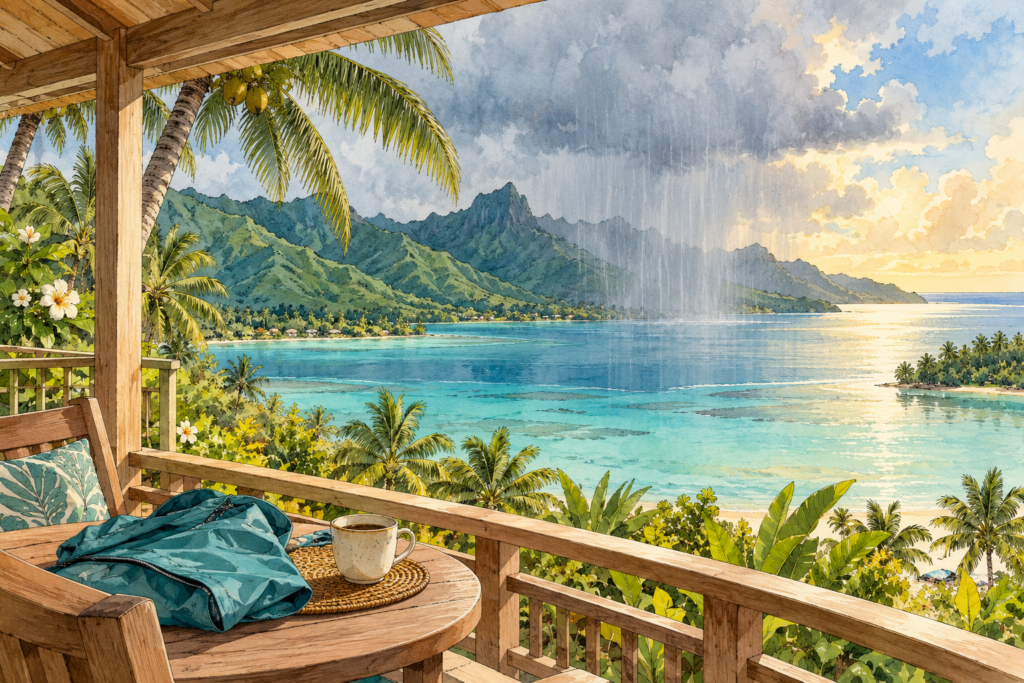
Rain symbols before an island holiday can make you rethink every booking. A more useful starting point is to understand the season, check the latest local information, and leave enough flexibility to change the order of your plans.
Know the seasonal pattern
Cook Islands Tourism describes a generally drier period from April to November and a warmer, more humid summer season. It notes that summer rain often arrives as tropical showers. Those are broad climate patterns, not a promise about your particular week: neither a dry-season booking nor a summer booking guarantees a certain kind of day.
Read the forecast as a planning tool
Before an outing, check the issue time and the place covered by the forecast. Fiji Meteorological and Hydrological Services publishes regional forecasts covering the Cook Islands, including Rarotonga. Use the latest bulletin and any official warnings rather than relying on a screenshot passed around a group days earlier. A seasonal travel article cannot replace an up-to-date forecast.
Keep one part of the day easy to move
A rainy spell can be a good excuse to explore Rarotonga’s museums, cultural displays and galleries. Keep a few options from the list below ready, then check opening hours and admission before you leave. Pair an indoor visit with a relaxed café stop or lunch, and keep your outdoor plans flexible. For heavy rain or an official warning, follow local advice and ask your accommodation whether travel is sensible.
Reach travellers planning their island stay
Advertising opportunityPut your business in the spotlight
Connect with travellers comparing local businesses. This framed space can feature your logo, a short introduction, contact details and a direct link to your website.
Ask about this advertising space ↗Paid placements are clearly labelled Sponsored. The comparison below remains available to help readers explore their options.
Museums and rainy-day places around Rarotonga
These are places to consider when beach plans change. Opening days, exhibitions, admission charges and covered areas can vary, so check with the venue before heading out.
Te Ara — Museum of Cultural Enterprise, Muri
Explore displays about Cook Islands history, culture and the environment, then browse locally made products or stop at the café. It is an easy cultural option to consider while staying around Muri. Te Ara visitor information ↗
Cook Islands National Museum, Avarua
Visit the national cultural collection and check what exhibitions are currently running. This is a different institution from the volunteer-run Library and Museum Society below. Contact the Ministry of Cultural Development for current visitor arrangements. National Museum and ministry information ↗
Cook Islands Library and Museum Society, Avarua
A small heritage stop on Makea Tinirau Road, a short walk from central Avarua. The society preserves historical and cultural material and operates a library and museum. Check its current visiting hours rather than assuming it is open all afternoon. Library and Museum visitor information ↗
Discover Marine and Wildlife Eco Centre, Arorangi
The wildlife place in Arorangi is the Discover Marine and Wildlife Eco Centre. Its live and static exhibits introduce local marine life, wildlife, geology and ecology, and its work includes turtle and bird rehabilitation. Ask which areas are covered and suitable in the day’s weather. Eco Centre visitor information ↗
Bergman Gallery, Avarua
For an art-focused stop, Cook Islands Tourism lists Bergman Gallery at Beachcomber in uptown Avarua, featuring modern Pacific art. Check the current exhibition and opening hours before visiting. Galleries and museums information ↗
A lagoon swim in a light shower? Check conditions first
You are going to get wet anyway, so a gentle shower does not automatically rule out a lagoon swim. The important checks are the water, wind and weather conditions. Only consider swimming at a locally recommended spot when the water is clear, conditions are calm and no warnings apply. Stay out during thunder or lightning, strong wind, rough water or heavy rain, and avoid murky water and river mouths after downpours or flooding. Te Marae Ora warns that contaminated floodwater can make streams and lagoon areas at river mouths unsafe. Ask your accommodation or a reputable local operator about conditions; avoid reef passages and obey signs. If there is any doubt, choose a museum or another dry activity instead.
Let the operator make the call on the water
Ask your tour operator how they confirm departures and handle cancellations or rescheduling. A little rain is only one part of the picture; wind, swell, and local conditions also matter. Do not assume a trip will operate because the sky over your accommodation looks clear. For turtle tours, follow current tourism guidance and the guide’s instructions.
Pack for a change of plan
A light rain layer, a way to protect your phone and documents, and a change of clothes can make a wet outing less inconvenient. Choose these around the activities you have actually booked. If your preferred day changes, having something dry ready can make it easier to settle into the next plan.
Choose your week around your preferences
Think about the kind of holiday you want: warmer evenings, outdoor exploring, plenty of water activities, or a quieter schedule. Use the tourism authority’s seasonal guide to inform that choice, then leave room for the weather you actually get. A flexible itinerary gives you more options than expecting every day to match the same picture.
Sources: Cook Islands Tourism: Weather & Seasons, regional forecasts, tourism galleries and museums guide, the venue links above, Te Marae Ora: flooding and swimming precautions, and Smartraveller: swimming safety. Venue and guidance links checked 20 October 2026.
Find ideas in our Rarotonga guide and check your transport options.


